Mastering Retro Aesthetics: A Deep Dive into the Pixel Art Brush Pack for Procreate
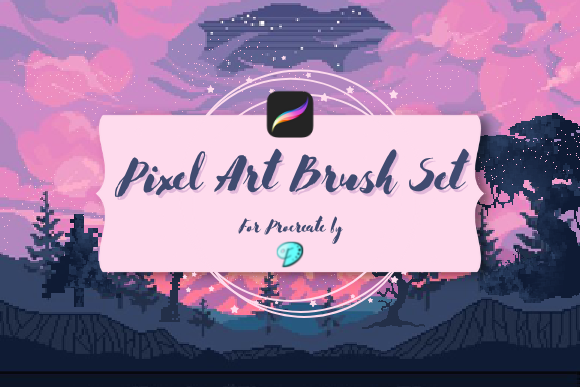
The resurgence of pixel art in modern digital media is not merely a nostalgic nod to the 8-bit and 16-bit eras of gaming; it represents a distinct artistic discipline that demands precision, patience, and the right set of tools. For artists working on the iPad, the transition from traditional desktop software to a mobile workflow has been seamless, largely due to the versatility of Procreate. However, achieving authentic retro aesthetics requires more than just a standard round brush. This is where a specialized Pixel Art Brush Pack for Procreate becomes an indispensable asset. By integrating a curated collection of 26 pixel brushes and 7 pixel stamps, creators can streamline their workflow, maintain crisp edges, and unlock creative possibilities that standard tools often obscure.
The Technical Foundation of Digital Pixelation
To understand the value of a dedicated brush pack, one must first appreciate the technical constraints of pixel art. Unlike vector graphics or high-resolution raster painting, pixel art relies on the deliberate placement of individual pixels to form shapes, shadows, and highlights. The challenge lies in maintaining integer scaling; if a line is anti-aliased or blurred even slightly, the crisp, blocky aesthetic is lost. Standard brushes in general-purpose illustration apps often apply smoothing algorithms that soften edges, which is detrimental to the genre.
A robust pixel art brush pack for Procreate addresses this by utilizing specific engine settings that disable interpolation and enforce hard edges. The inclusion of 26 distinct brushes suggests a comprehensive approach to the drawing process. These are not merely variations of size but functional tools designed for specific tasks. For instance, a "1px Pencil" is essential for outlining and fine detail work, while a "Cluster Brush" might be used for texturing surfaces like grass or stone without manually placing every single dot. This level of granularity allows professionals and hobbyists alike to work with the speed of a painter but the precision of a mosaic artist.
Deconstructing the Toolkit: Brushes and Stamps
The composition of this specific toolkit—26 brushes and 7 stamps—offers a balanced ecosystem for creation. The brushes likely cover a spectrum of needs ranging from basic geometry to complex texturing. In a professional setting, efficiency is paramount. Having immediate access to a brush that creates perfect diagonal lines or a tool that fills areas with a dithering pattern saves hours of manual labor. Dithering, a technique used to create the illusion of color depth through the arrangement of pixels, is particularly difficult to execute freehand. Specialized brushes automate this process while retaining artistic control.
Beyond the drawing tools, the 7 pixel stamps serve as accelerators for repetitive elements. In game development or icon design, certain assets appear frequently: clouds, foliage, UI buttons, or specific environmental debris. Rather than redrawing these elements every time, a stamp allows the artist to place a pre-designed, perfectly aligned pixel cluster onto the canvas. This ensures consistency across the artwork. For educators teaching digital art, these stamps provide excellent examples of how to construct complex shapes from simple blocks, serving as a visual aid for students learning the fundamentals of sprite construction.
Workflow Optimization for Diverse Creators
The utility of a Pixel Art Brush Pack for Procreate extends beyond the final image; it fundamentally alters the workflow. For game developers working on indie titles, the ability to sketch, refine, and export assets entirely on an iPad offers unprecedented flexibility. The tactile nature of the Apple Pencil combined with optimized brushes mimics the feeling of plotting points on graph paper but with the undo/redo capabilities of digital media. This hybrid workflow appeals to researchers studying human-computer interaction in creative fields, as it bridges the gap between analog precision and digital fluidity.
Consider the process of creating a character sprite. An artist might start with a rough silhouette using a large block brush, refine the outline with a 1-pixel hard edge tool, and then apply shading using a dithering brush. Without a specialized pack, the artist would constantly be adjusting opacity, flow, and stabilization settings to prevent unwanted smoothing. With a dedicated pack, these parameters are pre-configured. The artist focuses on the art, not the software settings. This reduction in cognitive load is crucial for maintaining creative flow, a concept well-documented in psychology and applicable to both business owners managing creative teams and individual freelancers.
Applications Across Industries
While gaming remains the primary driver for pixel art, the applications have diversified significantly. Marketing agencies now utilize retro aesthetics to evoke trust and nostalgia in branding campaigns. A well-crafted pixel art logo can stand out in a sea of sleek, corporate vectors. Here, the 7 pixel stamps included in the pack could be customized to match brand colors, allowing for rapid prototyping of marketing materials. Similarly, in the realm of education, pixel art is an excellent medium for teaching logic and grid-based thinking. Teachers can use these tools to demonstrate coordinate systems, binary code visualization, and spatial reasoning in an engaging, visual format.
For researchers and data scientists, pixel art techniques are occasionally employed in data visualization to represent discrete data points clearly without the ambiguity of smooth gradients. The strict grid alignment enforced by a quality pixel art brush pack for Procreate ensures that data representation remains accurate and unambiguous. Furthermore, the rise of NFTs and digital collectibles has created a new market for pixel artists. Collectors often look for the "hand-crafted" feel that only true pixel art provides, distinguishing it from low-resolution photos. Artists who can efficiently produce high-quality, authentic pixel work gain a competitive edge in this burgeoning marketplace.
Navigating Resolution and Canvas Constraints
One of the most critical considerations when using pixel art tools is canvas resolution. Unlike traditional painting, where higher resolution usually equals better quality, pixel art thrives on limitation. Working on a small canvas, perhaps 64x64 or 128x128 pixels, forces the artist to make deliberate choices about every pixel. The brushes in a specialized pack are designed to perform optimally at these low resolutions. Using a standard brush on a small canvas often results in jagged, inconsistent lines because the software attempts to smooth curves that are too small to accommodate them.
The 26 brushes in this pack likely include variants scaled for different zoom levels and canvas sizes. Understanding how these brushes interact with the canvas grid is vital. For example, a "hard eraser" in a pixel pack will remove entire pixels cleanly, whereas a standard eraser might leave behind semi-transparent fragments that ruin the transparency of a sprite sheet. Business owners commissioning art should be aware of these technical nuances to ensure they are receiving files that are truly resolution-independent when scaled up via nearest-neighbor interpolation, preserving the sharp edges that define the style.
The Role of Color Palettes and Shading
Pixel art is inextricably linked to color theory, specifically limited palettes. The constraints of early hardware meant artists had to create depth using very few colors. Modern pixel artists often emulate this constraint to achieve a cohesive look. While the brush pack itself provides the application method, the way these brushes lay down color is crucial. High-quality pixel brushes respect the underlying color index, allowing for clean color swaps—a technique where an entire sprite's color scheme is changed by swapping palette entries rather than repainting.
Shading in pixel art often involves "pillowing," where highlights and shadows are placed to suggest volume without blurring. The specialized brushes facilitate this by allowing precise placement of highlight pixels next to shadow pixels without bleeding. This is particularly relevant for creators producing assets for animation. Consistent shading across frames is essential for smooth movement. If the brushes introduce noise or irregularities, the animation will flicker. The reliability of a dedicated Pixel Art Brush Pack for Procreate ensures that the shading logic remains consistent from frame one to frame thirty.
Future-Proofing Creative Skills
Investing time in mastering these tools is an investment in a timeless skill set. As technology advances, the fundamental principles of grid-based design remain relevant. From UI design to architectural visualization, the ability to think in grids and modules is valuable. The pixel art brush pack for Procreate serves as a gateway to this mindset. For students and educators, it offers a low-barrier entry point into digital art that does not require expensive desktop setups. The portability of the iPad combined with the power of these brushes democratizes the creation of professional-grade assets.
Moreover, the community aspect of pixel art cannot be overstated. Artists share palettes, templates, and techniques. Using a standard set of tools like the 26 brushes and 7 stamps mentioned allows for easier collaboration. When a team uses the same foundational tools, file compatibility and stylistic consistency are easier to maintain. This is crucial for larger projects such as RPGs or animated series where multiple artists contribute to the same world. The standardization provided by a shared brush pack reduces the friction of merging assets and ensures a unified visual language.
Evaluating Quality and Authenticity
Not all brush packs are created equal. When selecting tools, creators should look for evidence of rigorous testing. Do the brushes maintain hard edges at all angles? Do the stamps align perfectly to the pixel grid? The presence of 26 distinct brushes implies a depth of functionality that goes beyond simple novelty. It suggests a toolkit built by practitioners who understand the pain points of the medium. For consumers looking to purchase assets or hire artists, understanding the toolset used can provide insight into the quality of the final product. Authentic pixel art requires authentic tools; shortcuts often result in work that feels "off" to the trained eye.
In conclusion, the integration of a specialized Pixel Art Brush Pack for Procreate into a digital artist's arsenal is a strategic move that enhances both efficiency and quality. Whether for a game developer iterating on a new character, a marketer designing a retro-themed campaign, or an educator illustrating complex concepts, the precision offered by 26 tailored brushes and 7 functional stamps is unmatched. It bridges the gap between the nostalgic charm of the past and the dynamic capabilities of modern mobile technology, empowering a broad audience to create with clarity, purpose, and style. As the digital landscape continues to evolve, the demand for clear, intentional, and grid-perfect imagery will only grow, making these tools not just accessories, but essentials for the modern creator.